


Calls for uniform targets and benchmarks around climate policy continue to gain momentum within the infrastructure sector.
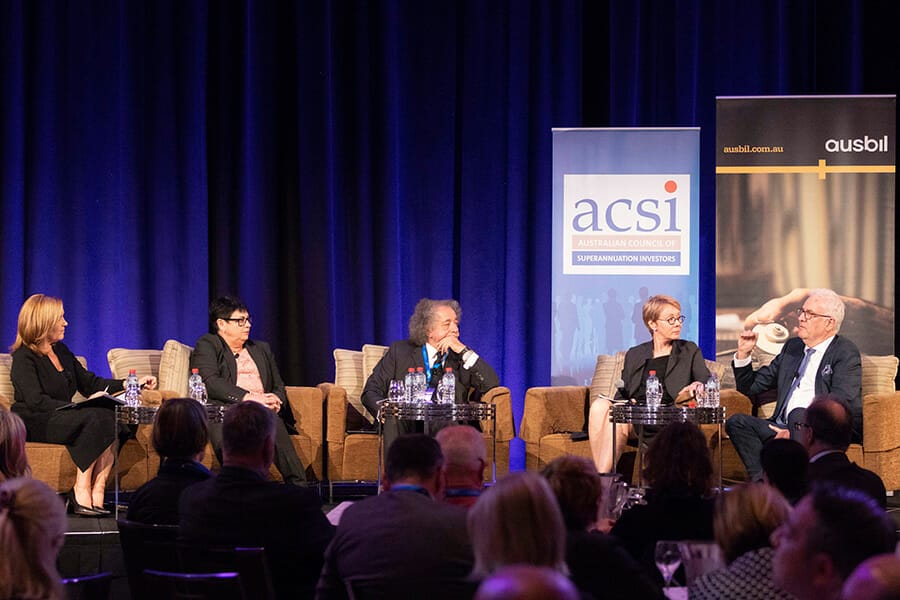
Environmental, social and governance (ESG) concerns were lively topics of discussion at the Australian Institute of Superannuation Trustees Super Investment Conference 2017, which was held on the Gold Coast September 6-8.
Hastings Funds Management director, infrastructure investments, Richard Barresi, argued the infrastructure sector has more work to do with regards to measuring its carbon footprint.
“The data around carbon footprinting, as it stands at the moment, is limited,” Barresi said. “The benefit of the work we are doing, and hopefully others will do, will be to present a richer data source to enable comparison and benchmarking.”
Barresi told the conference Hastings, an infrastructure management company, was leading the way in its sector by measuring the carbon footprint of its assets.
The company has about $14.3 billion in funds under management, including ports and toll roads.
Barresi said Hasting’’s modelling shows carbon costs in a number of pricing scenarios to be as little as 1 per cent.
“[ESG] is also part of our ongoing portfolio management,” he said. “It is at both the quantitative and the qualitative level of everything we do.”
Barresi also said Hastings would look at opportunities arising from climate change. He said the company was examining how emissions policies could increase transparency for investors.
Queensland Airports Limited (QAL) told the conference ESG is also on its agenda going into the future, and that it already undertakes some carbon measuring internally. The regional airport operator has four sites in Queensland, the biggest located on the Gold Coast and handling more than 6 million passengers a year.
QAL chief financial officer Amelia Evans said the infrastructure company’s ESG policy was also driven by shareholder value. She detailed the company’s exploration of solar, water recycling, and low-energy lighting, and its efforts at carbon accreditation.
“We clearly need some targets, without those we can’t continue to be accredited,” she said. “I would say we do [have a culture of sustainability] but it probably can be stronger.”
Evans said QAL has considered ESG for every part of its inherently high-emissions business, even down to how it might influence the Uber cars waiting near its terminals.
“Our rideshare drivers – we can encourage them to have electric cars,” she said.
Both Barresi and Evans agreed carbon pricing is in its infancy, and pledged to use their influence on stakeholders to encourage it as part of an ESG-integrated approach.
The panel was chaired by Australian Council of Superannuation Investors executive manager, governance, engagement and policy, Ed John. ACSI is lobbying ASX 200 companies to analyse and disclose the climate-related risks to their businesses.








Leave a Comment
You must be logged in to post a comment.