


Super funds are in a prime position to promote more open conversations around mental health among members and employers, serving as a conduit between two worlds where the topic is both a personal wellbeing issue and a business challenge.
One of the sector’s unique features is that it has broad exposure to the Australian economy, connecting with blue- and white-collar workers, and large corporate and small businesses, across various industries – the kind of reach that is invaluable for promoting mental health at workplace.
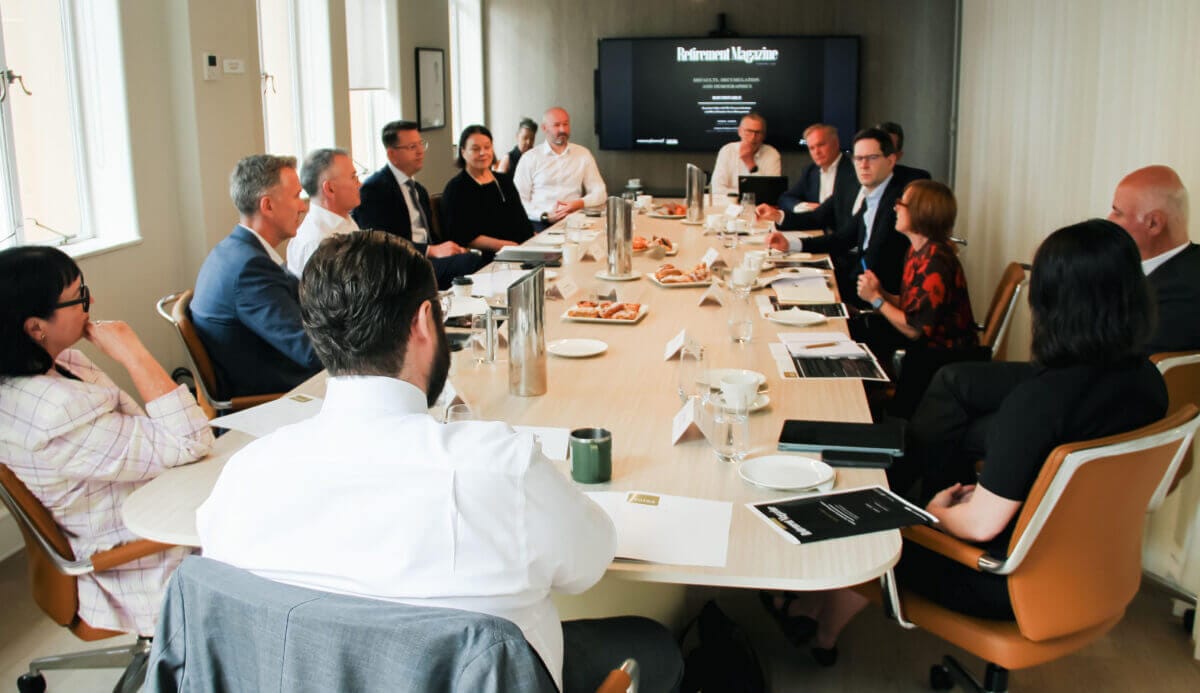
At an Investment Magazine roundtable, hosted in partnership with AIA Australia, funds also heard that by addressing mental ill health earlier, they could reduce the number of members making a claim and help them to improve their knowledge of insurance should they decide to access benefits after all.
Claims data tells the story
Dean Thomas, head of the superannuation trustee office at Colonial First State, said that the fund has seen about a three and half times increase in the number of total and permanent disability (TPD) and income protection (IP) claims in the past three years, and that mental health is the largest contributing factor to that surge.
He said that it’s a misconception that mental health issues are more prevalent among white collar workers; the fund has observed a large number of mental health-related claims coming from blue collar professions, often caused by financial strains or workplace issues.

Most of the employers contributing into CFS are small- to medium-sized enterprises and Thomas said the fund has an active campaign targeting engagement with those companies and their workers through seminars in person and online.
“[Employees will] start to know and understand the benefits more than just 12 or 13 per cent [of their paychecks] going into the superannuation. They can feel like they’re actually getting something – I think that’s the mismatch at the moment, because if money goes in, they just set and forget,” Thomas said, adding that financial wellbeing is also a key contributor to mental health wellbeing.
“We’ve just recently launched a number of modules to intra-fund services, one of the ones was [financial] health check that by far has been the most popular, people just wanted to get a sense of ‘how I’m placed at the moment’,” he said.
“The number of younger people actually jumping into that is very surprising.”
Pia Ransom, general manager of product at the $102 billion HESTA, said its members in healthcare are at the coal face of the mental health crisis – both through for caring for patients with mental health issues and due to psychological risks associated with working in healthcare.

But mental health is not only the second most prevalent cause of HESTA’s IP claims – which is part of its default offering – but also a high secondary cause. The fund is now trialling targeted engagement with employers where it is able to identify a high volume of claims coming through.
“[We say] this is what we’re seeing coming out of your workplace – how can we work together? We’ve got services that we can provide through AIA that members are paying for,” Ransom said.
“We had really good response. It’s still early days and we want to broaden that reach, but it’s been positive interaction so far.”
Meeting members where they are
The $22 billion Team Super, whose members are from a shrinking industry, has put a lot of thought into how job security impacts members’ retirement security and mental health. The fund, created by the merger of Mine Super and TWUSuper in 2025, has its roots in the mining industry, but the number of coal workers in Australia is expected to shrink from 40,000 to 8000 in two decades.
Tristan Reis-Freeman, chief strategy officer at Team Super, said the fund believes the most efficient way to communicate with members about mental health is by working more closely with external partners in the engagement value chain. For Team Super, that means building a relationship with unions and employers.

“You’ve got superannuation funds who have, in our case, really significant relationships through the union and independently of the union with your BHPs, your Rio [Tintos] and in your cohort some of the largest employers in the country,” he said.
“So [it’s about] really understanding what their objectives are from an employment point of view and what outcomes they want, working out where the trustee is aligned to the employers and trying to develop programs that work for both groups.”
Employers are more receptive to working with a super fund if they see the fund as a genuine part of the solution to addressing issues like financial and mental wellbeing, Reis-Freeman said, rather than as a service provider trying to set up a default workplace super arrangement.
“We’ve pushed our way in through the unions and through the employers to say we want to be there when you do training to miners, we want to be there on those pit top talks and we want to be there in the bus depots,” he said.
“When we’re out there, we’re not there to sell, we’re there to create value for members and non-members, and we’ll be in our proposition agnostic of who they are. Over time that’s continued to build trust with a lot of larger employers and that trust has translated into real meaningful outcomes.”
Digital as the new front line
While face-to-face interactions are important, the $237 billion Aware Super believes the digital experience of insurance is increasingly critical if super funds want to process claims or insurance arrangement changes at a greater speed.
David Evans, head of product and insurance at Aware Super, said the fund employs so-called “two-way integration” in insurance – which he called a pioneering move in the industry – allowing any insurance changes that members request to be received and confirmed directly by its registry without the need for a human agent in the process.

Aware Super reviewed its insurance arrangement at the same time it insourced its fund administration – a significant change process that completed around 2024 – and made the decision to digitise all interactions members can have with insurance.
“Members told us that they wanted to engage with their insurance, they just found it complex. So we talked about a number of more simplified digital experiences for them to give them more choice and control around their insurance,” Evans said.
Evans said Aware has found that getting members to engage with mental health services often comes down to packing and presenting the issue in the right way and, most importantly, in a manner that doesn’t conflict with the offerings employers may already have in place.
“The challenge in being as effective as we would like in this space is working with each employer and making sure that the services that are being put forward are complementary to what they’re already doing,” he said.
“For example, running a webinar around menopause support is a better entry and gateway for members to become aware of certain services and then to utilise those services.
“Sometimes it’s about the packaging and presenting it in a way that’s meaningful for people in terms of what they might be going through at a point in time.”
But Jenni Baxter, an independent insurance consultant, warned it’s important that funds don’t become complacent with their services.

“We can all point to really good examples of when we do a great job, but every fund has got examples where we’re not,” she said.
“We’ve got hundreds of death [benefit] claims that takes over a year to pay. We’ve got AFCA saying complaints are going up again, so I think we’ve got to be really honest.”
“[Mental health] is a massive area that we could make the change, and banks are ahead of us, and it’s our obligation to do much more on that space.”
A decade of changing expectations
Damien Mu, chief executive of AIA Australia, said that there has been a broader shift around what members expect from super funds and insurers around life insurance and mental health over the past 10 years and that they now expect a lot more from the insurance products they pay for.
Super funds and insurers are no longer just the product providers. Members and policyholders now expect funds and insurers to actively support their health and wellbeing – and when claims do arise, to facilitate recovery through early intervention and wrap-around services, not just pay a benefit.
“It really is a proposition that they’re looking for now to say ‘I get the value of insurance, but I actually want more from you, and I need more from you’,” Mu said.

AIA research conducted with Quantium in 2020 found that absenteeism at workplace caused by mental health issues is costing the Australian economy $3 billion a year in lost productivity. If the Australian population can at least practice “average” health habits, it will reduce the national depression incidence rate from 6 to 4.7 per cent and recover 4.7 million working days.
“We do know work is good for you, and people who go to work and feel like they’re contributing and getting rewarded for doing a good day’s work feel good about themselves, and they know that it’s also helping them to be financially secure,” Mu said.
“The unfortunate situation we’re seeing though is that while we’ve been making some good inroads, one of the growing areas of [mental health] claims we’re seeing are results of things that happen in the workplace.”
This means employers need to put in place more sophisticated communications and ways to spot early signs of mental health challenges at their organisations. David Burroughs, chief mental health officer at Westpac group, said psychosocial hazards in workplaces can easily be reframed and turned into protective factors for mental wellbeing.
“If I’ve got low role clarity, it’s not good for mental health. If I’ve got good role clarity, it’s good for mental health. If I’m experiencing poor organisational justice, my mental health will deteriorate. If I feel I’m treated fairly, it actually goes up,” he said.

This means optimising job designs at companies could have an outsized impact on employee wellbeing, and Burroughs said that it should be top of the to-do list for employers as they try to create psychologically safe workplaces.
The bulked-up Work Health and Safety Act in 2024, which dictated that employers have a legal duty of care for workers’ mental safety, also highlighted poor job and task designs as one of the most common psychosocial hazards at work, alongside dangerous physical environments, negative social factors and jobs which come with inherent psychosocial hazards.
But the push for better job design is still a conversation that “terrifies” many employers, Burroughs said.
“[There’s] this fundamental shift for an organisation to move from a model of the provision of support to the recognition of how work may impact someone’s mental health and wellbeing, then having to make actual changes around the way in which they design and allocate work,” he said.
“It’s a fundamental shift that we’re seeing in that space around the recognition that good work is good for people, and the fact that we’ve got a regulatory responsibility to do it, undoing a lot of the things that have been dominant with the workplaces for decades that hadn’t worked.
The cost of doing nothing
It is a challenging mindset switch, but one that must be done right by employers. Greg Jennings, chief engagement officer at Beyond Blue, said most people with experience of the issue will wait until they are actually in crisis to reach out for the first time.

“On average we see people waiting up to 10 years. Ten to 12 years is not uncommon, but we also see that of people who do reach out for support, 50 per cent wait until they’re very or extremely distressed,” he said.
“That means preventative approaches at work are even more important, because we have the opportunity to meet people where they are and to deliver effective interventions and help them get on the right track, but I recognise it’s a real challenge when people typically don’t take that first step for a long time.”
Sujan Yamunarajan, executive manager of growth at AIA Australia, said employers need to remember that workers’ wellbeing will have an impact on their bottom line.
AIA’s wellbeing unit worked with HR teams across a pool of employers to examine absenteeism data, finding that companies which enabled early mental health intervention saw significantly lower income protection and TPD claims.

“Those employers that don’t engage, their costs go up quickly, and what we see is a lot of the [wellbeing] benefits they would offer to employees as a way to differentiate themselves from their competitors would be cut,” Yamunarajan said.
“Then those individuals actually rely on the default insurance within superannuation, and then that’s further pressure on that system as well.
“The problem doesn’t go away, it’s just moving around.”






Leave a Comment
You must be logged in to post a comment.