


This article was originally published in the print edition of Retirement Magazine Vol. 3
Over many years, Australian superannuation funds have delivered excellent results for members while they’ve worked and accumulated their superannuation savings.
But can the same be said when it comes to how well funds have served members as they approached or lived during retirement? While lots of people have benefitted from their superannuation savings, funds have not done enough to provide strong service and appropriate guidance, advice and products to all members approaching or in retirement.
To ensure they achieve optimal retirement outcomes, in my opinion, superannuation fund members should be provided with
Strong member service. Superannuation is complex and most members need assistance to navigate this complexity. Providing strong service to members, where their needs are addressed in a timely, accurate and compassionate manner should be a key focus of funds. Such service can range across multiple channels (such as face to face, contact centres, and digital offerings).
Appropriate investment options and strong investment performance. These are required during both the accumulation and decumulation phases. To highlight the importance of investment earnings for retirees, Don Ezra, a prominent figure in retirement planning and investment, has estimated that, assuming an individual saved for a lifetime and gradually drew down their super savings, about 60 per cent of the individual’s retirement benefits will be derived from investment income post-retirement (with only about 10 per cent from contributions and 30 per cent from pre-retirement investment income).
Guidance and advice. Aligned with the provision of strong member service, members’ outcomes will typically improve, as will their peace of mind, when they receive assistance from sources such as financial advisers or digital advice tools.
Reasonable fees. In my opinion, there is no “perfect” fee level or model. Nevertheless, funds should strive to provide appropriate products and services to members, not skimping on products or services that are of value to members, and doing so as cost-efficiently as possible.
Appropriate range of products. Super funds have differing cohorts of members and funds need to provide appropriate products for each of those cohorts. In deciding on what products to offer, trustees should consider those needs. As is now apparent, many superannuation funds need to better address the needs of cohorts approaching and in retirement, to better cater for their relevant investment objectives, risk profile, desire for flexibility, and so on.
A case study of a strong performer for retirees
I was asked to write an article with a focus on how and why a particular fund with which I am very familiar, UniSuper, has been successful in serving its members approaching and in retirement by capitalising on its advantages, some of which exist due to the circumstances or demographics of the fund, and some of which have arisen through actions taken over time by the fund’s management teams and board.
I’ll start with what I believe are some of the fund-specific advantages that UniSuper possessed, and possesses, to enable it to take some of the actions that it has taken over time.
Large membership groups in relatively few locations. Unlike most large funds, whose members are spread across hundreds or thousands of worksites, until it opened to all Australians in 2021, UniSuper had the benefit of institutional concentration of its membership, with the majority of its members working at one of Australia’s 37 public universities. This enabled it to introduce UniSuper’s easy-to-access member centres to provide strong service to members.
Large average account balance. For many years, a significant portion of UniSuper members received employer contributions of 17 per cent of their salaries, often contributing a further 7 per cent or more themselves, thus generating much higher balances than would be provided by solely Superannuation Guarantee contributions.
A long heritage of providing defined benefits to many members. This heritage, along with DB expertise in management, on the product team and on the Board, has enabled UniSuper both to provide a flexible lifetime pension product and to have a strong focus on retirement income.
Although the fund has been open to all Australians to join since 2021, its strong focus on delivering only for individuals who work or worked in the higher education sector before then enabled it to know and understand its members well.
In addition to the above fund-specific advantages, I believe that, over time, UniSuper has taken specific actions to ensure it regularly lifted the services and products available to all members, with particular advantage to members approaching and in retirement.
UniSuper established its own advice offering more than 16 years ago, enabling members to access comprehensive and select advice from qualified, non-commissioned UniSuper advisers. This offering was introduced with the strong support of the Board, with the expectation that it would be successful and valuable in large part due to many of the above-noted fund-specific advantages.
Many actions have contributed to UniSuper’s strength in member service. Reinforcement to all staff of the importance of doing what’s best for members has been continuous for many years. Management and staff were instrumental in the adoption by the contact centre of a strong “genuine care” culture, aiming to resolve calls knowledgeably, efficiently and with compassion.
UniSuper members have significantly benefited from possibly the most important action taken by UniSuper’s Board and Investment Committee – the gradual introduction and expansion of internal investment management. The internal investment team has consistently delivered strong investment returns for members while providing significant savings in fees, with much more than half of the fund’s assets managed internally.
While it can be difficult and complex for a superannuation fund to self-administer (for example, record-keeping, contribution receipts, benefit payments, and administering insurance), in my opinion, UniSuper’s decisions over time to self-administer have led to it having greater control over its own priorities, staff understanding of the fund and ultimately how members are serviced.
A more recent action taken by UniSuper was its introduction of the provision of digital advice for its members. Such action should enable members to efficiently access advice and guidance services.
While UniSuper and other funds have evolved over time to ensure they can provide well for members’ retirements, more needs to be done.
Why has progress been too slow?
All superannuation funds, including UniSuper, have faced and continue to face many challenges and considerations that impact their appetites and abilities to take steps to better provide for members who have retired or are approaching retirement.
In my opinion, it is appropriate to acknowledge the validity of some of these in judging the progress (or lack thereof) of funds towards getting them in the best shape to produce optimal retirement outcomes for members.
Let’s consider a few of those sticking points, some of which are interconnected.
Firstly, the duty of trustees to act in members’ best financial interests imposes potentially conflicting challenges. Superannuation members can benefit financially when funds improve their services and/or product offerings. But what if, for some reason, the costs of introducing those services exceed the benefits for some or all members?
For some time, funds have appropriately chosen not to take action to introduce services or products that are not legislatively enabled. And in many cases where proactive changes might have been made, in anticipation of expected or hoped-for legislative change, most funds have chosen a wait-and-see approach. Why spend lots of time and money on something that can’t be implemented?
The Government has yet to determine whether to enable superannuation funds to introduce a new class of adviser, as well as the introduction of “nudges”, in Tranche 2 of the proposed Delivering Better Financial Outcomes (DBFO) package. While funds likely are taking actions in anticipation of these potential reforms, the uncertainty surrounding the changes is leading to delays in actions.
The membership profile of a fund can have a significant impact on the financial benefit to members of actions taken by the trustee. For example, should a smaller fund introduce the diverse service and product offerings provided by larger funds, just to keep up? How should the trustee of a fund with a proportionately very young membership base think about its retirement offerings, when the costs to introduce and implement those offerings will be borne by members who likely will never receive any benefit?
For some time, most people working in the superannuation industry have believed that more work needs to be done to improve how funds help and deliver for retirees and pre-retirees. But even if the will to do more was stronger, it must be acknowledged that the Government and regulators have not curtailed the changes imposed on funds in a multitude of areas, sapping funds’ abilities to deliver on the retirement and service enhancements. In my experience, non-discretionary legislative change has consumed a significant share of funds’ change capacities.
Decisions and actions to improve the retirement outcomes of members require the input of individuals with a diverse range of expertise, including member knowledge, product, advice, operations and finance. It helps significantly if such expertise also resides on the Board. In my opinion, the lack of such expertise within many funds has hampered progress in this area.
An apparent poor appetite of members for retirement income products must also be recognised as a sticking point for the introduction of retirement income products. This isn’t a great excuse, if such products would, in fact, financially benefit members. But why introduce, when the take-up of such products has been less than stellar?
Funds differ in their arrangements and interactions with financial advisers. Those relationships may materially impact how a trustee has chosen to address the retirement offerings for its members.
While I could provide many more reasons for funds’ not being where they could or should be, the above hurdles at least partially explain why.
Time to move faster
While acknowledging these hurdles, funds should continue to progress actions to improve retirement outcomes for their members. Some of those actions could include:
- Elevating the importance of lifting the bar for retiring and retired members;
- Taking advantage of external and internal expertise as appropriate;
- Focusing on member service enhancement as well as product development; and
- Encouraging necessary policy change to enable them and the industry to better deliver optimal retirement outcomes.
I am optimistic that funds will continue to lift the bar in the retirement space. While Treasury’s Best Practice Principles released in February this year are not mandatory, in my opinion, it will become more difficult for a fund to not take steps to satisfy most, if not all, of the principles. This, in itself, would lead enhancing change. I hope that conducive legislative reform will also assist.
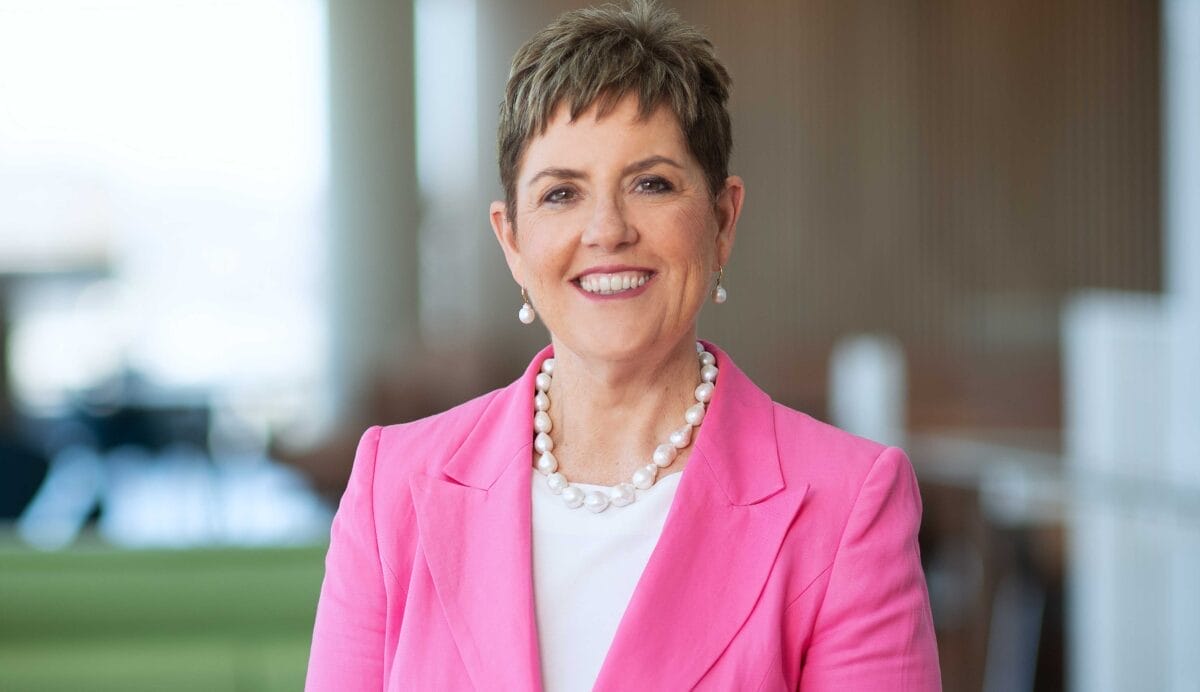
Kevin O’Sullivan has more than 40 years’ experience in the superannuation and actuarial sectors. He is a non-executive director of the Colonial First State superannuation fund trustee and of the Compensation Scheme of Last Resort, and a member of the Investment Committee of Deakin University. Previously he was chief executive of UniSuper. He holds a Bachelor of Commerce from the University of Toronto and is a Fellow of the Institute of Actuaries of Australia (FIAA). He is a member of the advisory board of The Conexus Institute, a not-for-profit think-tank philanthropically funded by Conexus Financial, publisher of Retirement Magazine.
















Leave a Comment
You must be logged in to post a comment.