


More than 1.5 million Australians aged 65 and over have left money sitting in superannuation accumulation phase, paying tax at 15 per cent on investment earnings when they could be in the tax-free pension phase and receiving higher retirement income.
A dialogue paper published by the Actuaries Institute, It’s Time: Here’s How to Turn Superannuation into a Retirement Income System, puts the aggregate value of those “stranded” balances at $326 billion. the additional tax cost to those individuals exceeds $2 billion a year.
The paper’s authors, Dr David Knox and Nick Callil, say that Australia has a fine accumulation system, but it’s time to change funds’ and members’ mindset from lump sums to receiving retirement income streams.
“When I look at the other leading pension systems around the world, they provide pensions or income streams and we don’t, and it’s a major failing of the Australian system,” Knox tells Retirement Magazine.
“So, what can we do to move us to income streams, pensions, in retirement? We want to move from where we are to where we want to move to as an evolution, not a revolution.”
Callil says that there is “a lot of inertia in the system” that must be overcome.
“There’s inertia at a member level, which this is trying to address,” he says.
“There’s also inertia at fund level. Funds are working within the parameters [that] exist currently, trying to engage more, but not really… looking to the bigger picture and saying, hey, the system needs to change.”
Three-part solution
The paper proposes a three-part solution which does not ask funds to do anything significant beyond what the government and regulators are already expecting of them.
APRA-regulated funds would be required to collect members’ bank account details from age 60; offer every eligible member in accumulation phase a pre-set account-based pension from age 65; and mandatorily transfer all remaining accumulation balances to pension phase at age 75. None of those steps asks funds to do anything significant beyond what the government and regulators already expect of them.
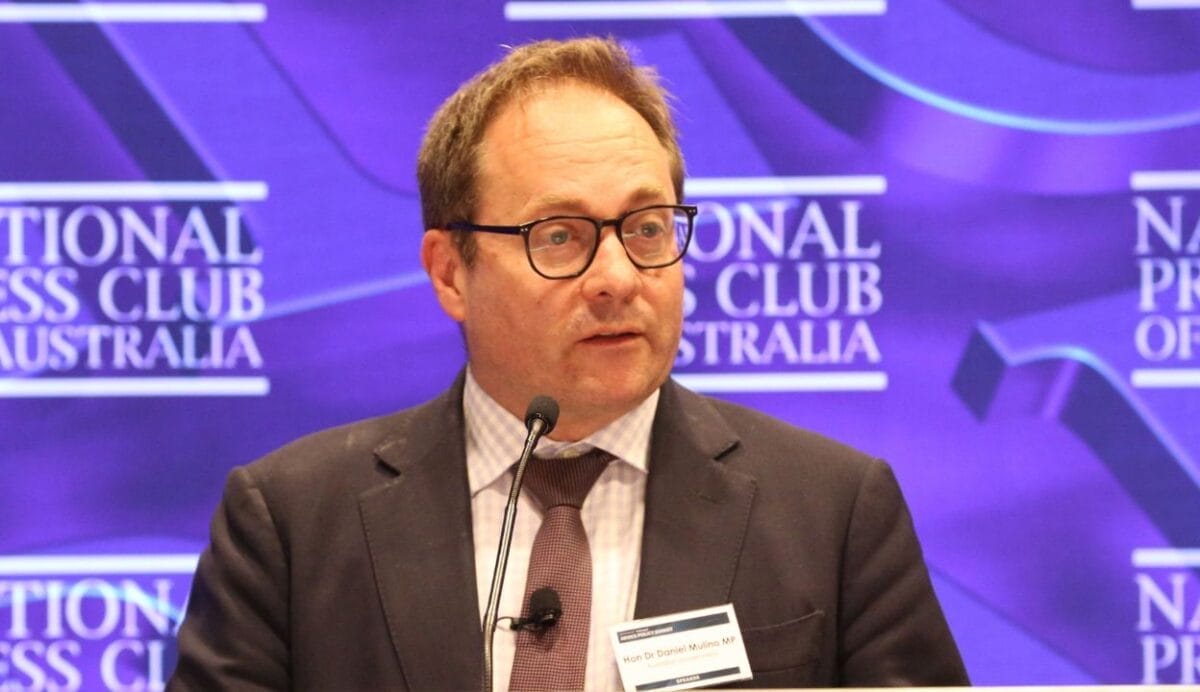
Funds are already under pressure to do better for members in retirement. Minister for Financial Services Daniel Mulino wrote in Retirement Magazine in April that it is well past time to shift the public conversation from superannuation as a “nest egg” to superannuation as “income for retirement”.
ASIC and APRA’s November 2025 Retirement Income Covenant (RIC) Pulse Check found that more than three years after the RIC took effect, the gap between leading trustees and laggards was widening, with too many funds content to make only incremental improvements.
The Actuaries’ proposals, which the authors call MyIncome, would see members aged 65 or older offered a pre-set account-based pension designed by each fund. The pension design would not be prescribed by legislation. Funds would set their own drawdown rates and investment strategies within a legislative framework, in an arrangement the authors describe as deliberately analogous to MySuper in accumulation phase.
Members accepting the offer would retain flexibility, including the right to change investment options, vary drawdown rates, or roll back into accumulation phase before age 75. The authors call it a “pre-set” option rather than a default, requiring member acceptance rather than automatic transfer. The offer would be repeated annually for as long as a member remained in accumulation phase.
‘It shouldn’t be there’
The paper applies the term “stranded” to the $326 billion still in accumulation. Callil says “we debated that, because that implies it shouldn’t be there”.
“We think that’s largely true. Some would argue, well, some people have made a deliberate choice not to transfer it – for instance, they’re still working.
“We address that by saying actually, the way the system is, even if you’re still working it’s still a better choice to move it into pension phase in the large majority of cases.
“I’m comfortable with ‘stranded’, but I do accept that there’ll be people who, for whatever reasons, prefer to keep it in accumulation phase. But purely financially, the way the system settings are, they’re likely to be better off in pension,” he says.
Knox says the paper does not propose compelling members to take a retirement income.
“If people want to take a lump sum at 65 or when they retire, they’ve still got the opportunity to do that,” he says. “We’re not banning lump sums. We’re not saying you can’t have it. And I think there is merit for many people to have access to a lump sum.”
The proposal to collect members’ bank account details from age 60 is intended to remove the main practical obstacle at the point of transition. Overseas experience suggests the prospect of regular income is sufficient incentive for most members to provide the necessary details.
From age 75, the transfer to pension phase would be compulsory, consistent with the age at which voluntary contributions cease and with the approach taken in Canada, the UK, and the United States. Balances exceeding the Transfer Balance Cap would be excluded. The proposal does not include a longevity component; Knox and Callil say their priority is to normalise regular drawdown in retirement as a foundation for lifetime income stream solutions.
Inertia compounded
The paper argues that the RIC, introduced in July 2022, has not moved the system far enough. Inertia has been compounded by the complexity of transitioning to pension phase, including completing forms, providing identity documents, and making investment decisions. That complexity is a feature of the current system, not an accident, and Knox and Callil say it can’t be solved just by continuing to beat funds with a regulatory stick.
ASIC and APRA reached a similar conclusion in the November 2025 Pulse Check. One in five trustees still did not provide members with information, guidance, or access to advice on drawdown strategies beyond the legislated minimum. ASIC Commissioner Simone Constant said retirees collectively entrust almost $600 billion in savings to super trustees, with two in five funds expected to have more than half their members in retirement by 2045.
A case study in the paper illustrates what is at stake. A 65-year-old with $450,000 in accumulation phase who transfers to an account-based pension and draws the minimum, placing the proceeds in a savings account earning 4 per cent, is better off after five years than if the balance had stayed in accumulation. In a scenario where the member spends $20,000 a year from that account, the pension transfer option remains financially advantageous for 29 years.
The changes required to implement the proposals are primarily legislative. Amendments to the Superannuation Industry (Supervision) Act and related regulations would be needed to enable funds to offer MyIncome without the forms currently required to commence an account-based pension, and to address interactions with anti-hawking provisions in the Corporations Act. Otherwise, funds would largely be formalising work they are already expected to be doing under the RIC.
The authors propose a two-year implementation period following the passage of legislation. Meeting that timetable would still leave more than six years between the RIC taking effect and the system routinely delivering functional retirement income solutions.
Callil says the proposals would move the system “one step [closer] to the model where super just starts paying you, rather than having to jump through hoops to actually receive it”.
Knox says that ideally, in five to 10 years’ time, “moving into an account-based pension would be almost semi-automatic”.
“It would be the expected behaviour,” he says. “We’re changing the mindset. We’re normalising that super is now [an] income stream.”













Leave a Comment
You must be logged in to post a comment.