


Top allocators across have conceded that it might be time to rethink the underweights to China that have often characterised the portfolios of local asset owners, as the Asian superpower’s intensifying AI race with the US creates attractive opportunities.
But they are still wary about the geopolitical and regulatory risks of China and the broader emerging markets and uncertain about where future global growth will come from.
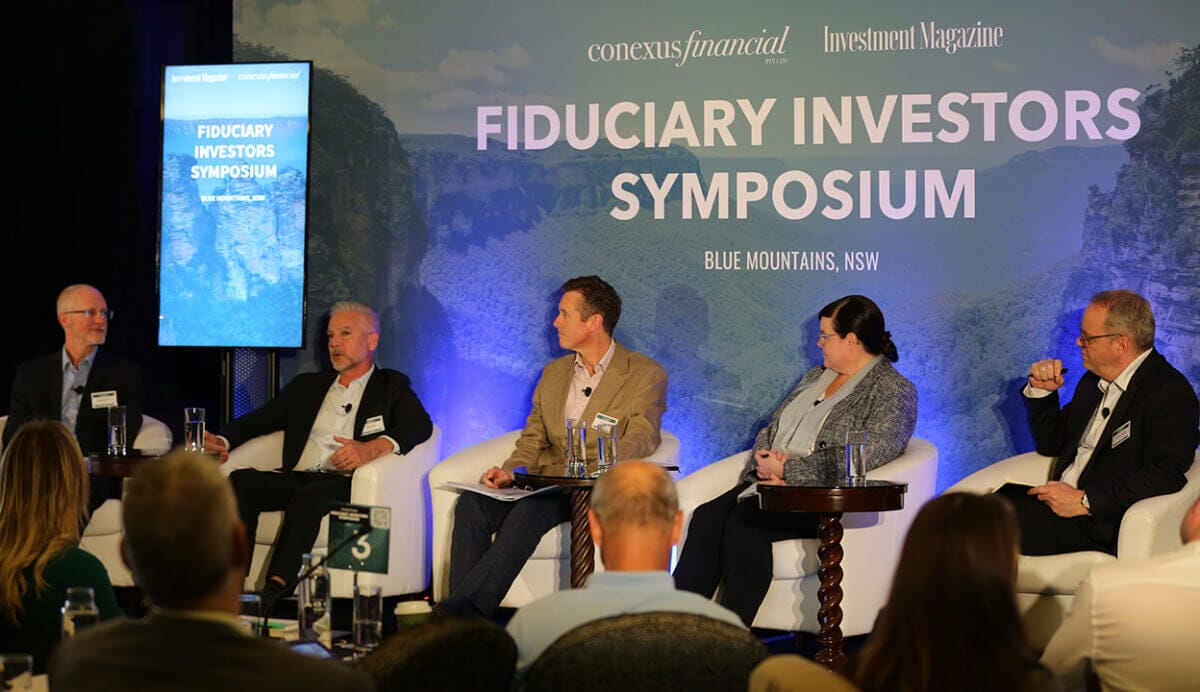
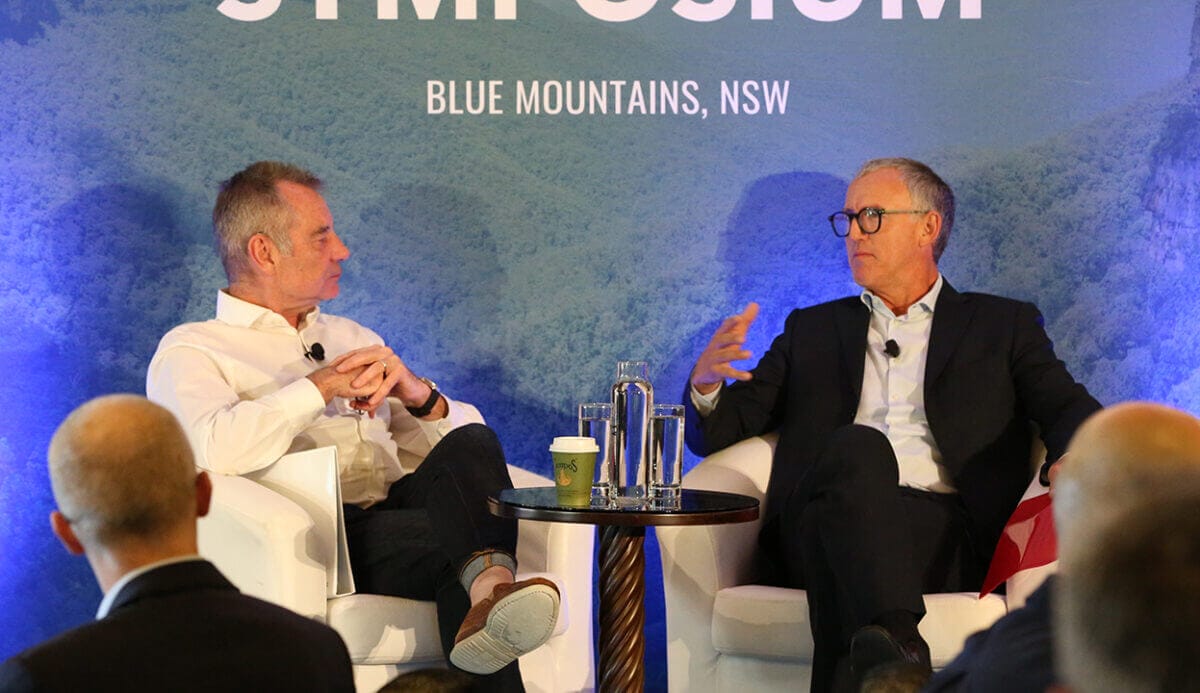
At the Investment Magazine Fiduciary Investors Symposium on Tuesday, Jonathan Armitage, chief investment officer of Colonial First State, which recently increased its emerging markets allocations, pointed out that a lot of investors are making decisions about China with “a set of criteria that weren’t financially driven”.
Having taken a trip to the world’s second-largest economy recently, Armitage observed that while the state is behind all forms of technology in China, a lot of investors “have not fully comprehended how powerful that will be”.
“[The Chinese government] is particularly focused on AI, but it’s [also] been around electric vehicles and another sort of set of components around that,” he said. “In doing that, it has also organised the energy stack that sits behind it. When you get that all concerted and moving in one direction, that is very powerful.”
“They are running a very different model economically as well as politically [from the Western world]. But actually when it comes to technology, they’re running a very different model as well.”
But Sonya Sawtell-Rickson, CIO of the $98 billion HESTA, observed that even that difference in approach to capital markets management between the US and China seems to be blurring.
“I don’t think we thought we would see the US government intervening in capital markets, challenging the independence in their central bank, challenging the independence of their judicial system, buying significant stakes in some of the largest companies in the US, and continuing to basically be a significant equity investor in a lot of the innovation economy,” she said.
“It’s feeling like an SOE market now. It has the potential to become more of an SOE market.”
Still, Sawtell-Rickson said that government support in equity markets can mean more positive momentum for US technology companies and others across key industrial sectors.
“It’s a different proposition to what we’re used to underwriting.”
Ali Parker, head of investment research and strategy at NSW state sovereign wealth fund TCorp, questioned whether Australian asset owners’ caution on China is still fit for purpose, and if it’s anchored in a geopolitical framework that no longer applies to the world.
“A lot of us are holding underweight positions to China because of the concerns about stranded capital from the Russia-Ukraine invasion,” she said
“Is that thinking of three years ago that we should try and let go of and try and think forward to where we actually want to be exposed in future?”
But Parker also noted that global investors haven’t come to a consensus about where in the world future growth would come from. Despite tariff uncertainties and geopolitical turmoil originating from the US in the last 12 months, net inflows into the country stand at $130 billion during the period.
“So I think it’s incredibly challenging for people to invest outside of an industry, a country, or a sector they know well, they’ve got strong relationships with and they feel comfortable with the regulatory environment.”
Tracey McNaughton, CIO at Escala Partners, which invests on behalf of family offices and foundation clients, said that despite the volatile relationship between the US and China, the two countries’ economies and financial markets can both benefit from the competition.
“The relations between the US and China are something to obviously keep watch of,” she said.
“We haven’t been in a situation where geopolitical risk has been this high for some time, and yet, two of the best performing markets recently is the US and China. So I find that quite interesting.
“At a previous conference I was at earlier this year, there was talk about a grand bargain being struck between the US and China, and will eventually get a [scenario] happening where they carve out their parts of the world and agree to disagree, but keep to their own space. Entirely possible in this world.”
But for now, technologies like AI are still being leveraged as a tool for great power competition, as Armitage highlighted the emerging idea of the “silicon curtain”, referring to the growing global divide between US-led and China-led technological ecosystems. While US technology companies serve customers around the world, China is using its technologies as diplomatic tools with emerging economies.
“If you’re a developing economy government, and you’re being offered DeepSeek and everything that comes with it effectively for free, whereas you are getting Western companies, or basically American companies, offering it at a very different set of economics, that [former offering] becomes very compelling.
“I think as we see these models and technology emerge that will become another component that we’ll have to think about.”







Leave a Comment
You must be logged in to post a comment.