


The $98 billion HESTA is using artificial intelligence to bolster its scenario analysis, with head of risk and portfolio construction Alvin Tan saying that the technology is better at spotting hints of regime shift than most humans and that AI models may have a longer market memory than many seasoned professionals.
The health industry super fund has incorporated an in-house neural network model into its scenario analysis which can compare characteristics of current regimes with those in the past. Its memory goes back to 1976.
For example, while the market was expecting a recession during 2023 because the US Federal Reserve had raised interest rates and inflation was elevated, the AI model was telling a different story.
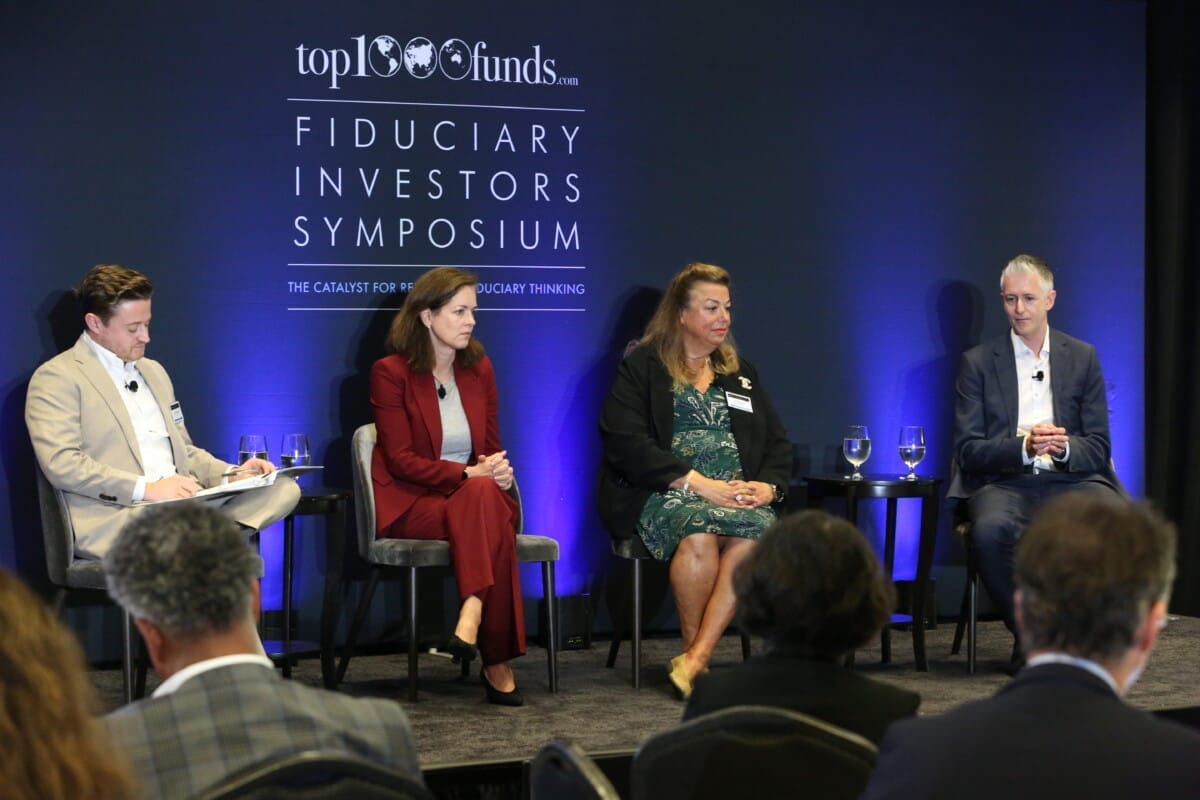
“It said that you should be buying equities because the yield curve, which people use as a traditional indicator of a recession, was telling you to buy equities,” Tan told the Fiduciary Investors Symposium in Singapore, hosted by Investment Magazine sister publication Top1000funds.com.
“[It’s] the same thing with currency today. You’ve had shocks and markets are down, yet the Australian dollar has pretty much held its ground. One reason for that, the AI model says, is when you get a combination of big [Australian] interest rate difference to the US plus where commodity prices are today, it tends to go up by quite a bit.”
HESTA is also using the model to understand the number one question haunting investors today: are US equities too expensive? The fund is using an average of the conclusions from its econometric, machine learning and traditional price-to-book or earnings models.
“We’ve come to the view that we do think US equities are expensive, but it’s probably likely to stay expensive for quite some time, and that’s how we build our strategic asset allocation portfolios,” Tan said.
As AI models become more sophisticated, asset owners and managers are rethinking portfolio construction as an activity sitting at the nexus of human and machine, which means gaining an edge over the market increasingly needs investors to tap into the wisdom from both sources.
Kevin Chang, Temasek head of quantitative strategy and performance analytics, said the $324 billion Singapore-headquartered global investment firm sees a dual role for AI in the investment process: to get better predictive signals and to enhance analytical methodologies.
Chang leads the quantitative and systematic strategies team from the Singapore office and said Temasek started utilising AI to harness better signals as early as a decade ago. He shared that in 2015 one of Temasek’s senior management asked his team to investigate bringing in alternative datasets to supplement the firm’s fundamental investing style.
“So by 2017, we’d already hired somebody dedicated to lead our data science efforts, and right away that really opened up all sorts of interesting doors,” Chang told the symposium.
For example, Temasek uses AI to analyse aggregated consumer spending data to understand regional economic trends, which during the COVID era offered a window into the pandemic’s effects on consumers.
“I wouldn’t really call that part quant investing directly, but it certainly adds a lot to the information that you have, and it can be used to verify hypotheses,” Chang said.
Building the analytical side is “trickier”, especially when trying to back-test modern generative AI models, Chang said.
“It’s difficult to get recently trained models to ‘unlearn’ more recent events and information” in order to simulate how an investment strategy would have performed in the past without the knowledge of future outcomes.
But Temasek is currently exploring approaches that blend fundamental insights with systematic signals.
“[We] then try to tilt that fundamental portfolio by using overweights and underweights in order to improve on that [fundamental idea],” Chang said.
“What ends up happening is that we can often… push the expected returns a little higher, but of course, whatever that is, whether it’s positive or negative in a given month or a given quarter, it’s always going to be small relative to the contribution of the stock pickers in the first place.”
This is because the systematic signals are carefully risk-controlled and by design constructed to be small relative to the underlying beta performance, Kevin explained.
“It gets swamped by the rightness or wrongness of the underlying stock picks.”
Despite AI’s potential to enhance investment outcomes, senior investment manager at Pictet Stéphane Daul urged allocators to be discerning when managers are touting AI capabilities and making investment choices from alternative data.
News is one such example of alternative data. The company conducted a study in early 2026 which analysed 15 years of news on MSCI World companies, used natural language learning processing to transform each news into a sentiment indicator, and then plotted the indicators’ correlation with companies’ next two weeks of return.
Of the news sampled, Pictet estimated that only 60 per cent are earnings-related.
“If you look at this [earnings-related] news only, then you get actually a predicting power at -0.1 per cent, meaning there’s no information left in this news,” he said, adding that the traditional earnings per share momentum calculated from I/B/E/S data has a predicting power of 1.8 per cent.
“Yes, we can boost predictive power using AI techniques. But still, you need to be very careful when you actually allocate to an asset manager that does that.”
Temasek’s Chang also urged peers against overfitting AI models – where algorithms fit too closely to the data it trained on to offer accurate predictions with external data sets.
“If you test too many times, you’ll always find something that’s significant. But that doesn’t mean it works out of sample,” he said.


















Leave a Comment
You must be logged in to post a comment.