
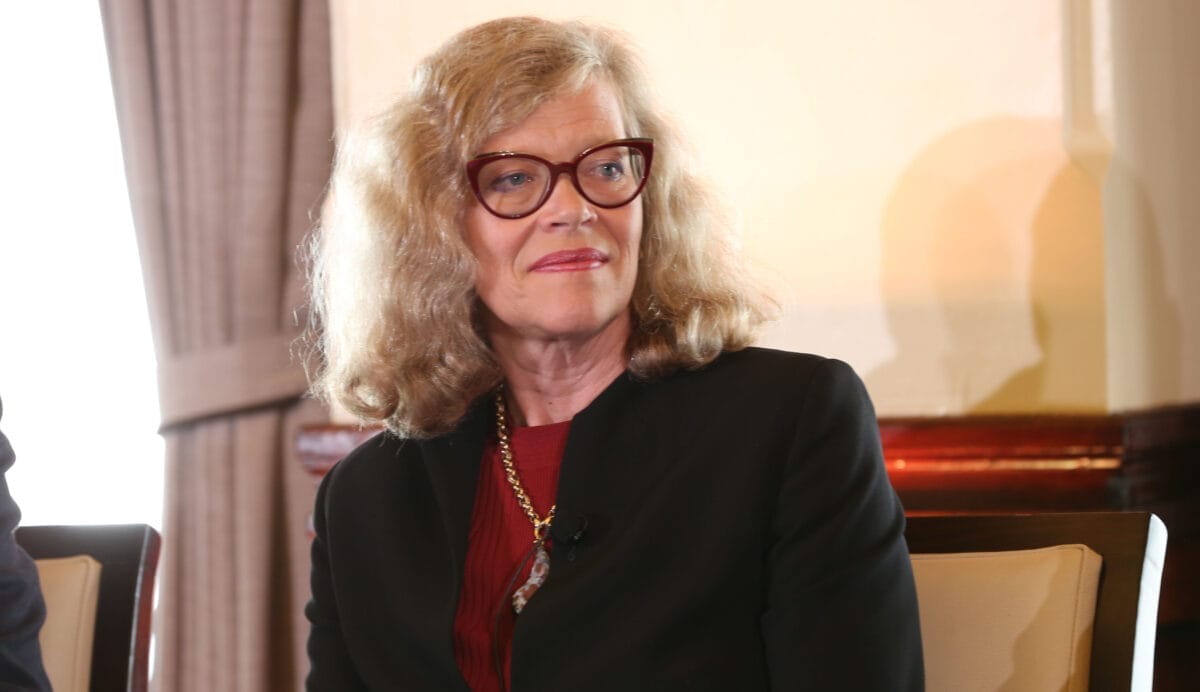
As the AI thematic drives listed markets higher and higher, private equity has become a drag on performance for Australian asset owners. But those who are steering clear might want to take another look, according to Anika Choudhury, portfolio manager private equity at Australian Retirement Trust.
“Private equity is, on a rolling three-year basis, running at bottom quartile returns in history, while listed markets are running at almost top percentile returns,” Choudhury told the Investment Magazine Fiduciary Investors Symposium in the NSW Blue Mountains. “If you have any belief in mean reversion, it’s a pretty good time to invest in private equity.
“And I think the fundamentals of private equity remain the same. That ability to control and drive operational improvements still exists, and I think will become increasingly more important. And there is just a much larger investable universe in private equity, and that will continue to grow as listed markets become increasingly concentrated.”
Beyond the problems with private equity performance is the perception and expectations of what that performance should be following an era of outsized returns, said Merrick McKay, partner and head of private equity for global private markets solutions at Patria.
“People were getting sort of ridiculous returns – 15-17 per cent, well above listed markets, and thinking the good times wouldn’t stop on the back of massive distributions,” McKay said. “If you think back over the cycle, typical buyout distributions average out around 21-22 per cent of opening NAV; there was a period leading into Covid and after that where it was 25-27 per cent, and then it fell off a cliff.”
“I think you’re really seeing now the sort of flip side where those excess returns were unsustainable… but there’s a difference between the returns one should expect for money that’s been put in the ground already versus money being put in the ground now, which will be much better.”
But not everybody can keep putting money in the ground. Bill Watson, formerly CEO of First Super and now CIO of BUSSQ, said that while the portfolio at the former was relatively well-diversified, made good money (until recently) and has invested through the cycle, the same behaviour is not possible at BUSSQ.
“We’re under the pump, at BUSSQ, with the performance test,” Watson said. “We don’t have the luxury of being able to see the same kind of private equity program as at First [Super].
“Coming into a fund that doesn’t have a lot of Your Future Your Super outperformance, private equity is probably not going to be a pond in which we fish. If we do, it would be via secondaries, and it’s not at this time of the cycle. Whatever money we put in the ground has got to start producing from day one, and that’s a pretty big ask at the moment.”
Managers and investors are also contending with the SaaSpocalypse which, having now played out very visibly in the listed the space, is spreading into unlisted assets too. But McKay warned that “people are applying the same thinking across the board, which is a bit dangerous”.
“The way we think about it is in a bit of a matrix – the type of software, is it application at one end or enterprise at the other – and then the customer type,” McKay said. “I think what we see is vertical software, built for a specific industry where there’s deep workflow integration, domain expertise, proprietary data – that’s an area where AI is probably helping, because it’s increasing that moat.
“Whereas the real area of concern is where it’s software that may be targeted towards consumers or small businesses. When we look through our portfolio and primary program and co-investments, we think there’s around three per cent of the total portfolio where we’d say there’s probably medium to high risk, but we’re not painting everything with the same brush.”
Choudhury said that ART is thinking about the issue the same way, with the businesses most likely to have defensive moats being those already deeply embedded in customer workflows or which have “sovereignty” over customer data.
“Anything that has a regulatory or compliance need has defensive characteristics, I think,” Choudhury said. “Ultimately, though, you can’t take away from the risks that come with the current environment. And I think that margin pressure from AI, or really that threat of cheaper alternatives, will exist, and that might lead to greater risk premia, which means valuations aren’t moving as much as they have in the past.”
But while that definitely impacts the incumbent portfolio, it might actually be an advantage for the go-forward portfolio.
“We don’t think AI is the end of software, but there will be a much greater dispersion of outcomes,” Choudhury said.
Watson said that First Super applied the same analytical framework mentioned by McKay and that it had diversified across the Australian economy into “companies doing real things, which will be beneficiaries of AI”.
“There’s a company called Nutra Organics, which I think as a few people shake their heads, they buy the 45 buck cans of beef broth, and thank you very much for doing that on behalf of First Super members. AI is not going to rub out the can of beef broth, but it is going to make that business better, more efficient, and reach a lot more customers.
“It just depends on how you’ve diversified and what your conviction is. At BUSSQ, we’ll still be investing with managers that invest in real businesses that do real things. We might not get the spectacular returns that you get for the one in 10,000 Canva. We are not smart enough to pick the one in 10,000. What we like is diversification, and that’s what we tell our members.”

(L-R): Merrick McKay, Lachlan Maddock, Bill Watson, Anika Choudhury

25 May 2026 16:19
art, Patria, bussq, First Super



Investments

Despite the dizzying technological innovations in China and the investment opportunities that come with them, Team Super chief investment officer Seamus Collins says some risks, including weaker investor protection, make him hesitant to allocate large chunks of the portfolio to the world’s second-largest economy.












Leave a Comment
You must be logged in to post a comment.