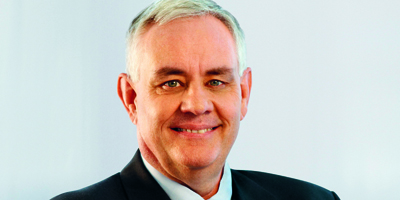
QSuper reveals its next challenges

If MySuper were not complicated enough, then QSuper went one further with eight cohort strategies to meet member needs. Rosermary Vilgan, the fund’s CEO explains why the fund is still evolving. The evolution of QSuper is not slowing down. There might be rivals wishing that were not so, or potentially those who have to implement … Read more


Cbus assesses and rejects pre-retirement derisking

Cbus has decided against a pre-retirement derisking phase for its default fund, despite surveys showing members wanted this to happen. The decision is also counter to the trend where Sunsuper has introduced derisking at age 55 and QSuper has introduced seven cohorts for members at ages 40, 50 and 58. Cbus members would have benefitted … Read more

Mark Delaney fears a stampede out of equities

A market wide deleveraging out of equities could be the next big investment risk facing superannuation funds, Mark Delaney, chief investment officer of Australian Super has warned. Speaking in a debate on dynamic and tactical asset allocation strategies, Delaney saw the risk caused by the similarity of investor positions. “We’re still overweight stocks. Everyone’s in … Read more

Super CIOs in joint call for a more equitable society

Greater co-operation of superannuation funds is needed to check growing wealth inequality, leading chief investment officers told delegates. The call arose in a discussion of Thomas Piketty’s best-selling finance book Capital in the 21st Century and its warning that the rate of capital accumulation is growing faster in western societies than the economy. This, Piketty … Read more

ACSI has growing role on ASX pay

The Australian Council of Superannuation Investors (ACSI) has seen a significant lift in the number of ASX listed companies proactively approaching it for advice on improving remuneration structures and health and safety standards in their supply chains. ACSI represents $400 billion in investments and owns about 10 percent of the ASX’s top 100 companies. Gordon … Read more

Retirement income did not fall for most in GFC: QSuper

The Global Financial Crisis (GFC) never happened in income terms. That’s the new finding from QSuper that’s causing it to rethink the way it communicates to members. Brad Holzberger chief investment officer at QSuper, has described the find as “astonishing”. “If we’d known this, we would’ve communicated it very differently to members at the time,” … Read more

Infrastructure: the perfect asset?

Infrastructure and superannuation go together well. So well, that a simple online search of the terms turns up the phrases “If structured correctly, infrastructure is the perfect asset”; “stable, long-term cash flows… likely to provide attractive opportunities”; “a particularly attractive investment because of its potential to offer stable, long-term growth”. It is believed it will … Read more

Bob Henricks criticises lack of unity on independents debate

Bob Henricks, one of Australia’s longest standing trustee directors, has accused industry associations of a tacit acceptance of the government’s push for more independents. Henricks, the chair of Energy Super since 1995, is opposed to the change, as he sees a lack of evidence to suggest that independents will add to fund performance and is … Read more

Emslie becomes AIST president

Angela Emslie, the chair of HESTA, has become the new president of the Australian Institute of Superannuation Trustees (AIST). Emslie has been a director of AIST since 2007, during which time she has represented AIST on the Strong Super Governance Working Group and helped its fund governance and educational guidelines. One of her ambitions in … Read more

Stronger Super will fail to significantly reduce fees

Stronger Super will only succeed in reducing fees by 0.1 per cent and further competition is needed to match the low investment costs achieved in other countries, a damning report from the Grattan Institute has claimed. The report entitled Super sting: how to stop Australians paying too much for superannuation is authored by Jim Minifie, … Read more

For how long will Japanese equities boom?

After two decades of disappointment Japanese equities posted an incredible 57 per cent return in 2013. Leading institutional investors met in Melbourne to discuss if there is more growth to come. Investing in Japanese equities comes with the baggage of around 20 years of underperformance relative to other developed nations. The causes have been a) … Read more